Samuel Clare
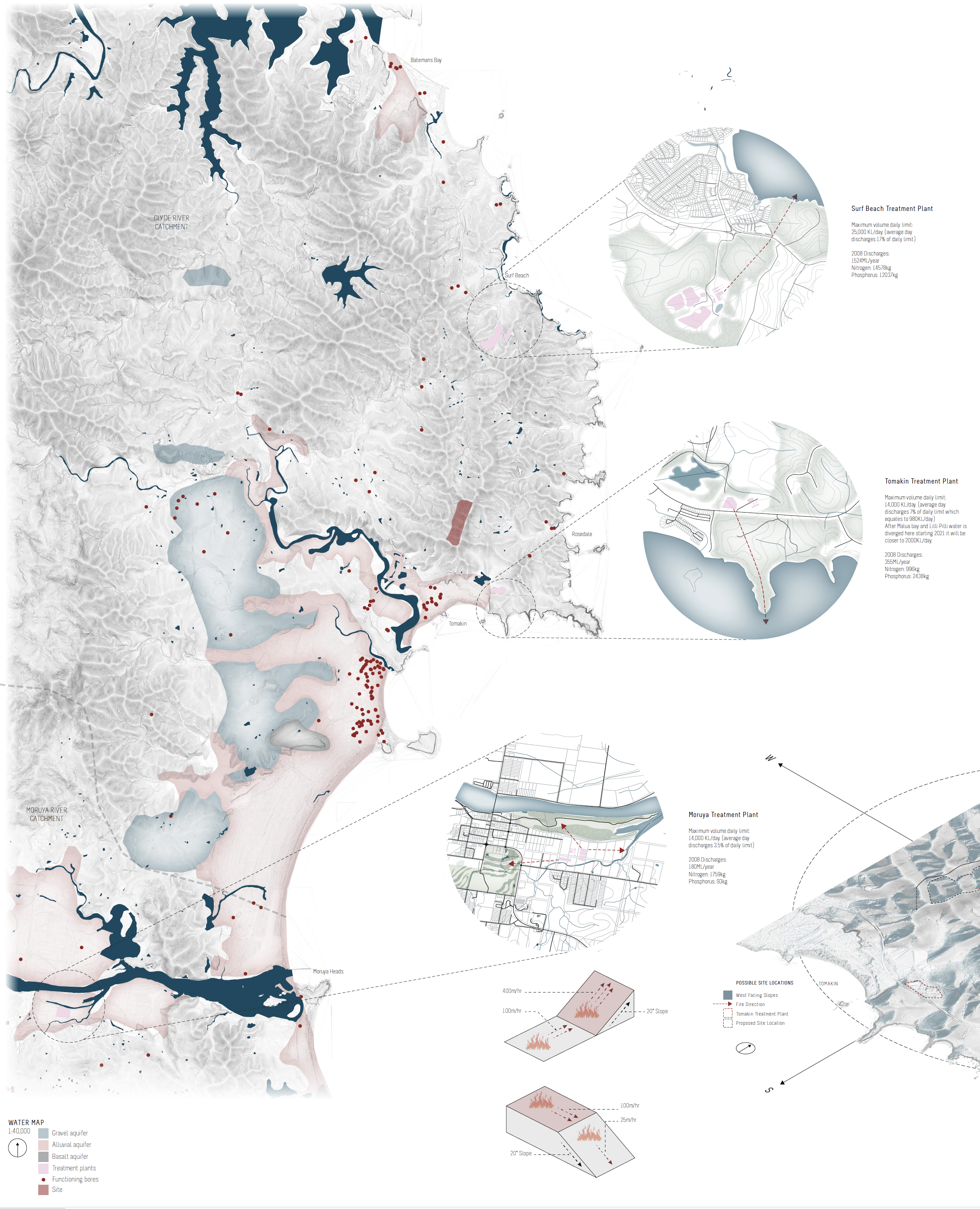
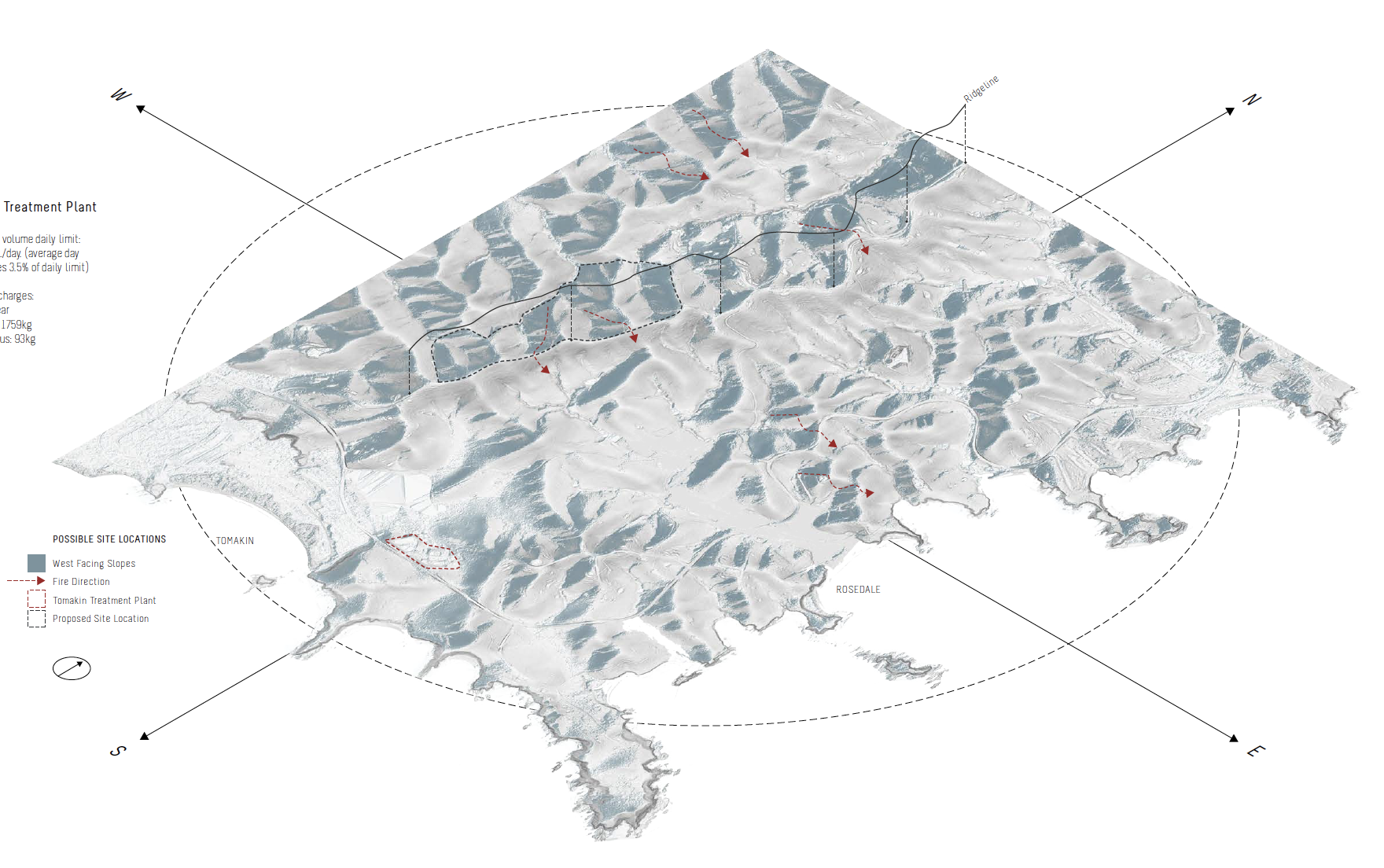
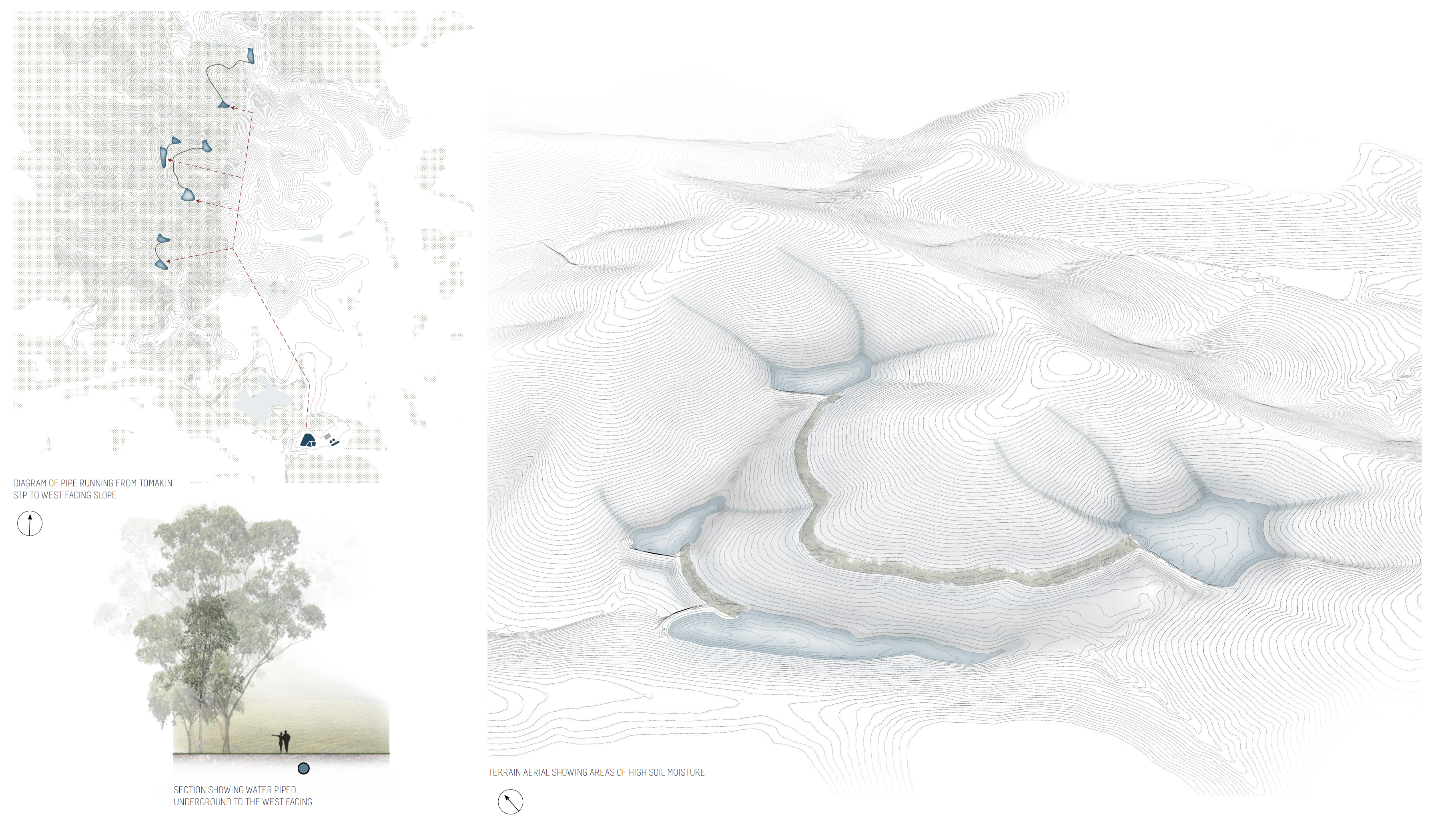
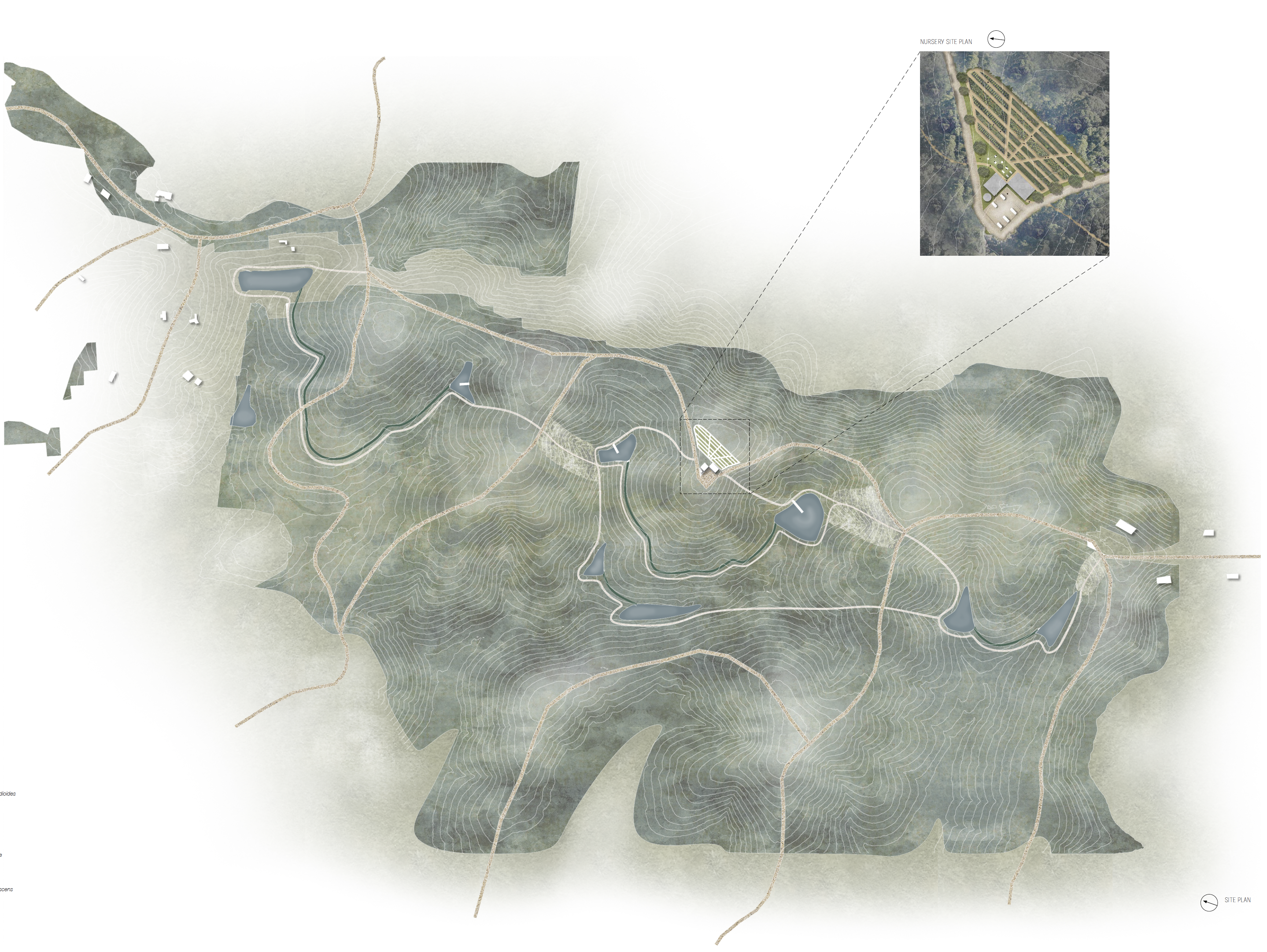
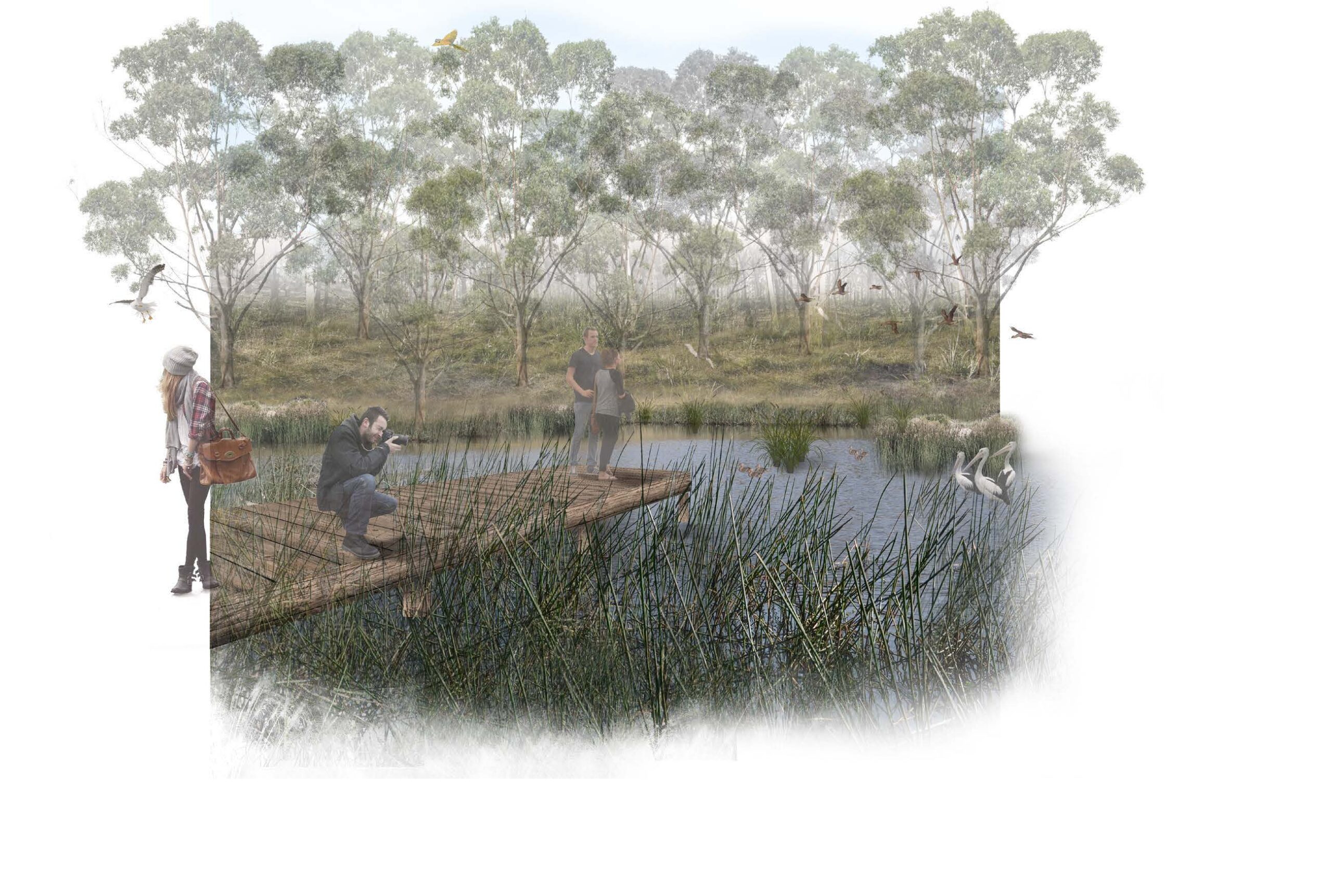
This project explores how we can retain moisture in the soil by maximising the use of regional water around Rosedale through both infrastructural and natural systems to slow the progression of fires up west facing slopes. It involves recycling water and redirecting it to the west facing slope where it can then be channeled in a specific way that allows it to be retained in high altitude wetlands which consequently increase soil moisture, whilst also providing a beautiful recreational space for local residents. I propose to pump highly treated black and grey water from Tomakin treatment plant onto the west facing slope to the just north above the plant. The pipe will be dug 1m underground and run 2km parallel to the tree line up onto the ridgeline, as constructing it on cleared land will be much easier, cheaper and has less impact on the vegetation.
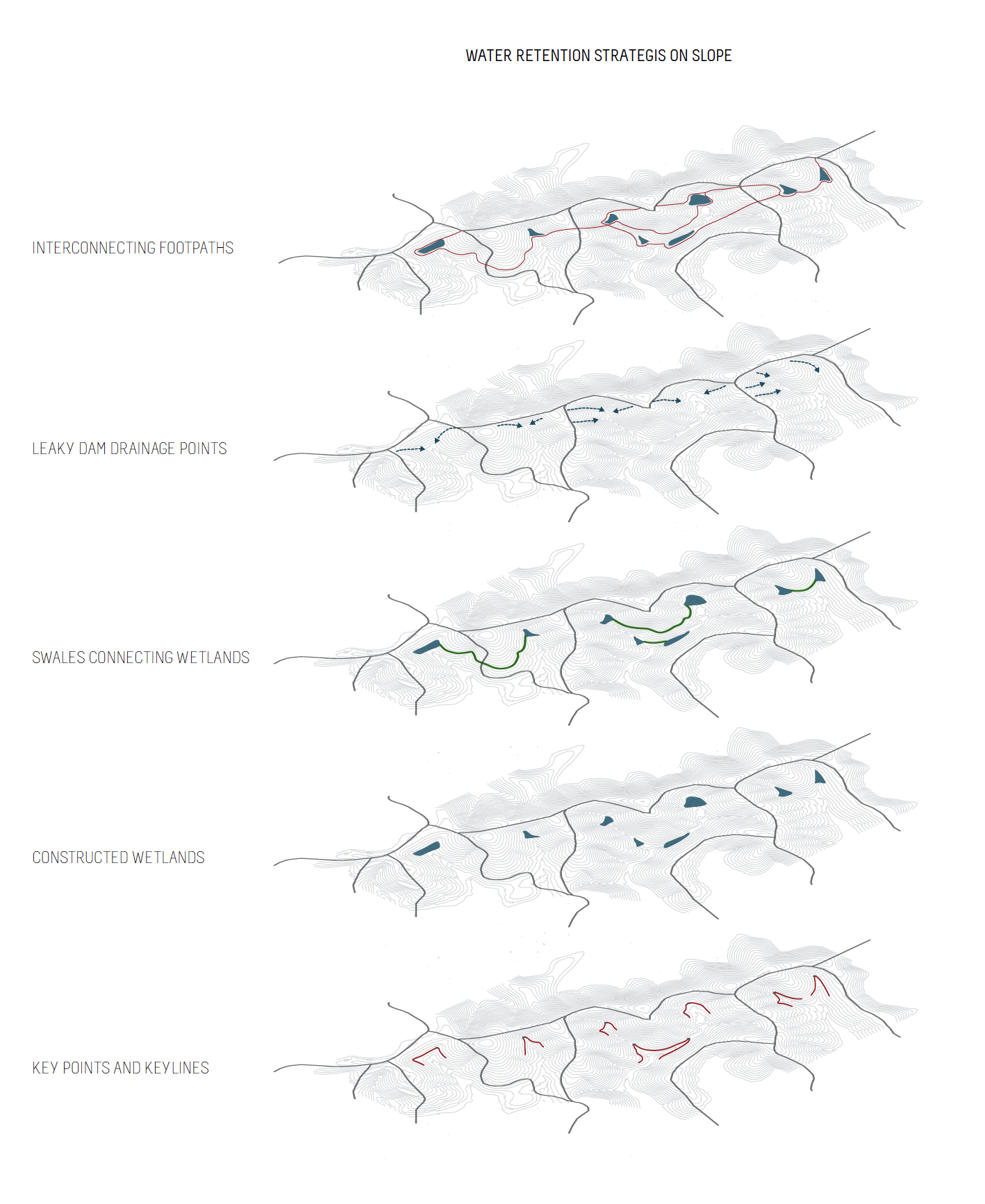
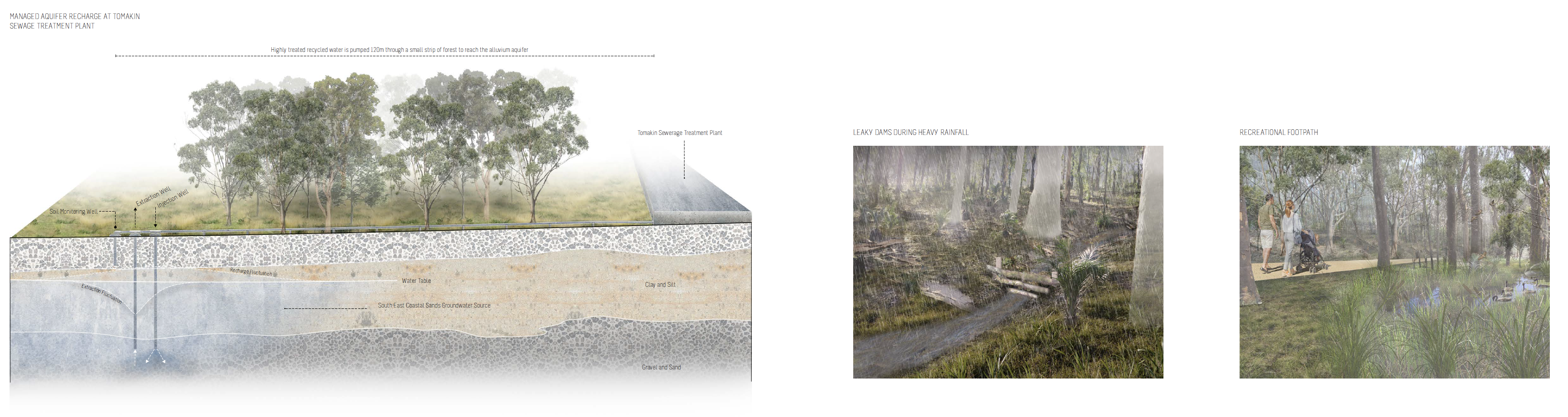
With the goal being to retain as much moisture as possible on the slope, this project has adopted a range of strategies to naturally control the water. The design strategies to the right firstly locates the key points and keylines of the slope which the aerial below shows how these areas are essentially saddles along the slope from where wetlands can be constructed, then the wetlands that are on the same contour are connected by swales which will allow the water to balance between the wetlands. The simple concept of leaky dams are implemented along the drainage points leading into the wetlands to slow runoff to ensure as much moisture seeps into the soil. And lastly, interconnecting footpaths join the existing roads to the wetlands to create a beautiful walking track and more importantly act as little fire breaks to control and guide small cool burns on the slope. This saves physical labour and time as the traditional owners of the land explained how they would use whipper snippers to cut out guidelines for their controlled burns, so this could support them quite a lot.
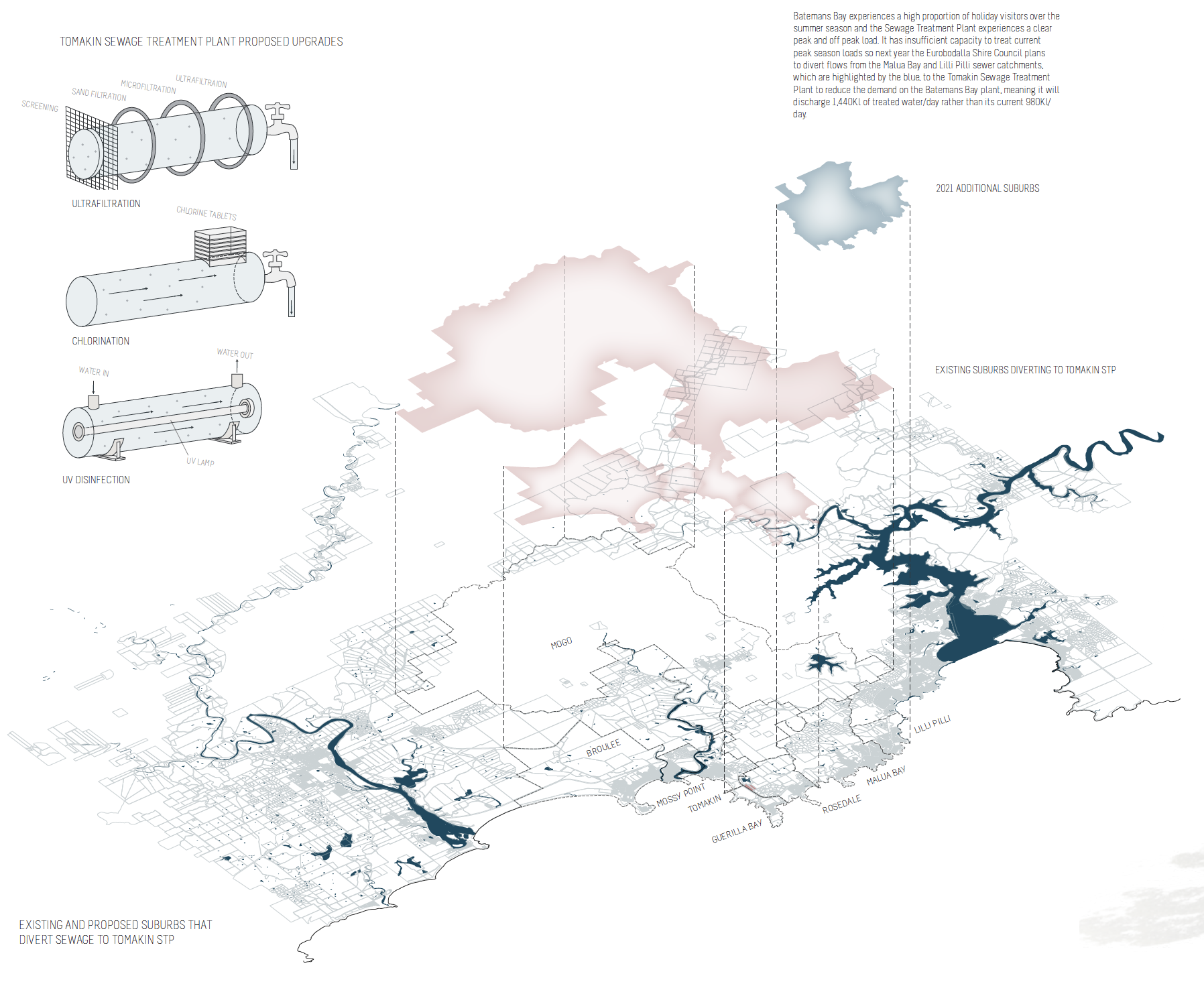
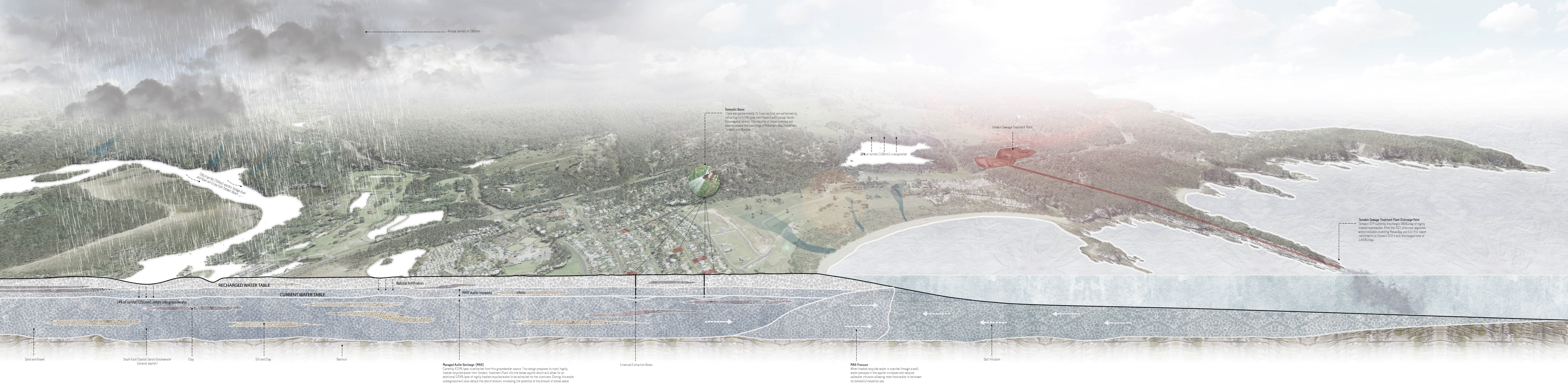
With the current amount of treated discharge from tomakin treatment plant it would take approximately 20 days to fill the proposed wetlands on the slope, however, because the wetlands will not need to be constantly filled up and there is still treated water being discharged daily, this project begins to look at ways of storing water for times of need. I propose to inject the additional treated water into the below aquifer where it can be managed, stored and retrieved when needed. This technique is known as ‘Managed Aquifer Recharge’, which also minimises the impact of evaporation and prevents too much seawater from getting into the aquifer which actually extends the life of the groundwater reservoir. Once the Malua Bay and Lilli Pilli sewage is redirected to Tomakin Treatment Plant next year, it will produce 525ML/year of highly treated water, which can be stored in the aquifer to ensure it is not evaporated and then reused in the dry season. This can also provide a higher yield of water for the community to utilise on their grey water systems such as gardening, sinks, showers and washing machines etc..
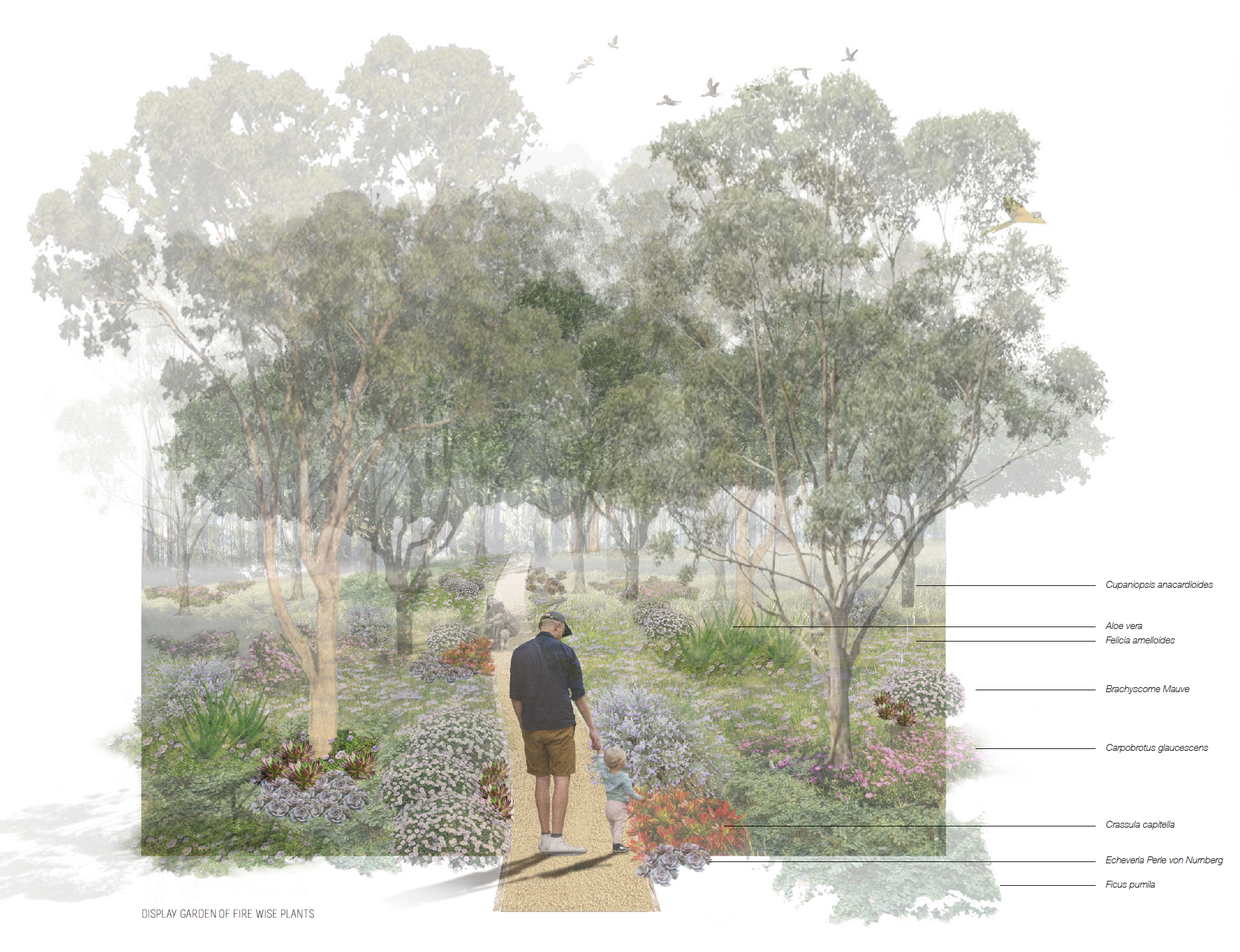
This project also lloks at the detail of the resilient recreational park on the slope. Fire wise display gardens along the footpath are implemented and stretch across on either side of the footpath to immerse the public in a vibrant atmosphere. These paths then lead to the top of the hill where a nursery and cafe sit. The firewise plants in the display gardens can be purchased at the nursery which provides an incentive for locals to use these plants around their houses. They also become familiar with what plants should be used for fire prone areas and if multiple purchases are successful, a more resilient, fire proof town will begin to emerge.